



DOUBLING DOWN: How North Dakota Republicans Are Riding the MAGA Death Spiral
BISMARCK, N.D. — Despite MAGA being on a death spiral, and now only representing about 24% of voters nationwide, the North Dakota Republican Party continues to reshape state law in the image of the national MAGA movement — passing a wave of legislation targeting transgender rights, immigration, library books, voting methods, and public education.
The result is a state GOP more ideologically aggressive than at any point in recent memory, and more internally fractured, with the populist wing censuring its own governor and watching the party’s finances crater in the process.
The story of North Dakota’s MAGA realignment did not happen overnight. It has been building session by session, convention by convention, until the recent legislative cycle made plain just how extreme rightward the party has traveled.
The LGBTQ Rollback Continues
Despite many larger issues impacting nearly every North Dakotan’s daily lives – such as issues of affordability – North Dakota’s MAGA-aligned lawmakers pushed culture war issue legislation – despite it affecting less than 1% of the state’s entire population – restricting transgender rights. This has been the most consistent throughline of North Dakota’s MAGA-aligned lawmaking: Working to foster hate and fear of certain minority populations. The groundwork was laid in 2023, when the state Legislature advanced 10 bills in a single day that advocates said targeted the state’s LGBTQ community, setting a single-day record for such legislation according to the Human Rights Campaign. Among those early measures, some passed with veto-proof majorities, including one that restricted gender-affirming medical care for minors and another that banned transgender students in public and private K-12 schools and colleges from playing sports on school teams that align with their gender identities.
In 2025, the Legislature returned to that terrain. A panel of lawmakers considered a bill requiring North Dakota to recognize only two genders and another authorizing social workers to offer conversion therapy. House Bill 1181, introduced by Rep. SuAnn Olson, R-Baldwin, would require all state-funded entities to refer to people by their sex as determined at birth.
The gender definition bill moved through the Senate with little debate. House Bill 1181, which passed the House in February with a 74-13 vote, seeks to define a person’s gender in North Dakota Century Code as their biological sex, applying to institutions that receive state funding such as public schools and state agencies, and the materials they use.
Enforcement of existing transgender restrictions was also tightened. Gov. Kelly Armstrong signed a bill on May 1, 2025, that prevents K-12 public schools from having all-gender bathrooms and allows parents to file complaints if they think their child’s school is not following state laws governing accommodations for transgender students. The legislation built on a 2023 law and added penalties for noncompliance. The House approved the policy by a vote of 75-14 and the Senate by a vote of 40-7.
This is an issue that affects less than 1% of the population – it’s a culture war issue to consume lawmakers’ time and to keep voters distracted from real issues impacting the lives of the majority of North Dakotans.
Immigration: Pre-Empting a Problem That Doesn’t Exist
With no sanctuary cities in the state, North Dakota Republicans moved in 2025 to make sure it stays that way — and then some. Again, a non-issue for the state that is a culture war divider – wasting state lawmakers’ time on bills when other laws could have been developed, read, and passed to positively impact more North Dakotans.
As part of the nationwide Republican push to tighten immigration laws, the North Dakota Legislature approved a bill in April 2025 to punish communities that enact “sanctuary city” policies — rules allowing local law enforcement to withhold certain information from federal immigration authorities. The bill’s sponsor, Rep. Jim Kasper, R-Fargo, acknowledged directly that there was no existing problem to solve. “I am not suggesting that we have a problem, but we could have a problem,” Kasper said while introducing the bill.
Under the bill, complaints alleging unlawful sanctuary city policies could be filed by any individual. Jurisdictions found to be in violation by the attorney general could risk losing state funding, which would then be deposited into a “Sanctuary Compliance Fund.” The Senate passed the measure with a 41-5 vote.
Books, Libraries, and the Governor’s Veto
Perhaps no piece of legislation this cycle generated more internal Republican conflict than Senate Bill 2307, a measure requiring most libraries to keep material deemed sexually explicit in areas difficult for minors to access, and threatening librarians with criminal prosecution for noncompliance. Another non-issue for the state, but a culture war issue for MAGA-aligned Republicans who could have been spending time on bills to help North Dakotans.
Reading the tea leaves that the vast majority of North Dakotans oppose this culture war posturing by the Republican legislature, Gov. Armstrong understood the bill was a Republican Party killer and vetoed it, calling it “a misguided attempt to legislate morality through overreach and censorship.” About 1,000 people participated in silent protests at 17 libraries around the state in March to show their opposition to the bill, and more than 2,000 people sent Armstrong messages urging the veto.
The bill had narrowly passed both chambers, with 49-45 votes in the House and 27-20 in the Senate, making a veto override nearly impossible. But the damage to Armstrong’s standing within his own party was already done.
Voting Rights and Democratic Norms
The 2025 session also saw Republicans move to restrict how North Dakotans vote and how they can change their constitution.
Gov. Armstrong signed a bill prohibiting ranked-choice and approval voting in North Dakota. The legislation directly impacted Fargo, which had adopted approval voting after citizens voted for it in 2018. Under the approval voting system, voters could select as many candidates as they wanted, and the top-ranked candidates won. The system was used in three city elections, improving results from candidates winning with about 17% of votes in 2018 to winners garnering about 45% support in 2024.
The League of Women Voters of North Dakota condemned the measure, noting that in November 2018, 63% of Fargo voters had cast their ballot in favor of using approval voting, and the system had been used successfully and securely three times since.
Separately, the Legislature referred a constitutional amendment to the 2026 ballot that would raise the threshold for voter approval of constitutional amendments. The resolution would increase the threshold for voter approval of a constitutional amendment from a simple majority to 60%. The League of Women Voters criticized the effort, saying the Legislature was “attempting again to weaken the power of the people to amend our state constitution.”
Religion in the Classroom
In one of the session’s most contentious debates, Republican lawmakers pushed to require the Ten Commandments to be posted in every public school in the state. House Bill 1145 would have required posting the commandments in every public K-12 and college classroom. Opponents said the compulsory posting of them in public classrooms would violate the U.S. Constitution’s ban on establishing a state religion.
The bill was ultimately defeated on a 53-38 vote after a lengthy House floor fight, but not before its chief sponsor, Rep. Jeff Hoverson, R-Minot, made the case in stark terms. “If putting the Ten Commandments in the schools would save one life, would it be worth it?” Hoverson said. “If it saved one marriage, would it be worth it?” Another supporter, Rep. Nico Rios, R-Williston — who had made homophobic and discriminatory remarks toward a police officer while being placed under arrest on DUI charges in December 2023 — said many children would benefit from being exposed to Christianity in school.
Again, MAGA Republicans wasting lawmakers’ time and demonstrating a disregard for the First Amendment which clearly prohibits state-sponsored religion: “Congress shall make no law respecting an establishment of religion”. This harkens back to the founding of American history with Pilgrims leaving England to escape religious persecution — they were seeking religious freedom, not a religion dictated by a king.
DEI: An Early Mover
North Dakota was actually ahead of the national curve on diversity, equity, and inclusion legislation. Then-Gov. Doug Burgum signed a “specified concepts” bill into law banning educational institutions from asking students or prospective employees about their commitment to DEI initiatives and preventing public higher education institutions from requiring noncredit diversity training of any students or employees. That was in 2023, before similar measures became a national flashpoint.
As we’ve written recently, the number of completely incompetent appointments of people in Trump’s cabinet only make the argument for looking at all people’s qualifications as opposed to defaulting to “old white men” for positions.
The MAGA Takeover of the Party Itself
While Republican legislators were pushing a MAGA-aligned agenda through the statehouse, the populist wing of the party was executing its own takeover of the NDGOP’s governing structure — and turning its sights on the state’s most popular Republican.
At a party reorganization meeting at NDGOP headquarters in Bismarck in June 2025, as “No King” protesters waved signs across the street, the party elected Matthew Simon as its new chair and censured Gov. Kelly Armstrong over his veto of the book ban legislation.
Simon, vice chair for NDGOP District 8, narrowly defeated longtime party member Shane Goettle for the position. Goettle was viewed as a more establishment candidate while Simon drew support from the rising populist wing of the party. The final vote was 24-22 in Simon’s favor after five ballots.
The censures that followed were extraordinary. The NDGOP passed two resolutions against Armstrong — one over his veto of book-banning legislation and another over his property tax plan. Armstrong, a former NDGOP chair himself, had won his gubernatorial election with nearly 70% of the vote — more total votes from North Dakotans than President Trump received in the state.
Simon’s background made the outcome all the more striking. During the 2020 election cycle, he urged his followers on Facebook to vote for far-right independent candidate Michael Coachman instead of incumbent governor Doug Burgum. That same cycle, he also urged a write-in vote for MAGA activist Charles Tuttle over NDGOP-endorsed Superintendent of Public Instruction candidate Kirsten Baesler.
Rep. Bernie Satrom, R-Jamestown, chair of NDGOP District 12, said he believed the right-wing members of the State Committee have a “general disdain” for Republican legislators and statewide office holders. Rep. Karen Karls, R-Bismarck, called it “worrying” that she had not met Simon before the meeting and said she felt “bullied” when she tried to explain her point of view.
Financial Fallout
The populist takeover has come at a financial cost. According to a report distributed to State Committee members, the party operated at a more than $91,000 loss in 2024, a presidential election year when one would expect fundraising to be strong.
Things got worse after Simon’s election. The party’s cash balance stood at just $85,000 as of January 2026, down almost 11% from December and more than 60% since the populist faction captured control of the party’s governing State Committee. In one particularly stark month, the NDGOP collected just $370.48 in contributions in August 2025.
The party’s choice of keynote speaker for its upcoming state convention underscored the divide. Far-right Minnesota U.S. Senate candidate Royce White, a former basketball star and self-described antisemite who made headlines for spending campaign dollars on personal luxuries and strip clubs during the 2024 election cycle, was scheduled to be the keynote speaker.
Bizarre and Extreme Behavior
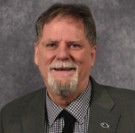
Like many MAGA diehards, Minot’s District 3 Representative Jeff Hoverson (pictured) has been documented with extreme and bizarre behavior. Hoverson, as reported by Rob Port, was banned from the Minot International Airport after accusing a security agent of attempting to touch his genitals. He also objected to a Hindu religious leader participating in the Legislature’s multi-denominational invocation and, on his radio show. Hoverson, against the First Amendment of the Constitution and well established case law, also backed legislation to mandate prayer and the display of the Ten Commandments in schools, and supported the end of Supreme Court precedent prohibiting bans on same sex marriage.
Voters vs. the Base
The tension at the core of North Dakota’s Republican Party is the gap between what the populist wing demands and what the broader electorate actually supports. Former state lawmaker Rick Becker, a darling of the populist right, lost badly on the statewide ballot in his U.S. Senate and U.S. House campaigns in the 2022 and 2024 cycles respectively. At the NDGOP’s 2024 state convention, the populist faction denied the party’s endorsement to U.S. House candidate Julie Fedorchak and incumbent Superintendent Kirsten Baesler. Both went on to win in the general election.
Armstrong himself has remained defiant. “I just view it this way: I’m a North Dakotan first. I’m the governor second and a Republican third,” Armstrong said about the censures on a podcast appearance.
As the 2026 election cycle approaches, the question hanging over North Dakota politics is whether the MAGA faction that has seized the machinery of the state party can translate its organizational power into electoral dominance — or whether the traditional Republicans who continue to win elections will hold the line. The traditionalists still have the support of most voters based on election outcomes, but the populists have been steadily taking over control of the NDGOP.
For now, both things are simultaneously true in North Dakota: a Republican legislature passing some of the most aggressive MAGA-style legislation in the country, and a Republican governor vetoing parts of it, getting censured by his own party, and remaining overwhelmingly popular with the public.